Our Latest Blog For You
Discover market trends, developer insights, and technical updates directly from our core engineering team.

How Generative AI is Powering Everyday Apps – From Emails to Spreadsheets
In recent years, Generative AI has become one of the biggest game-changers in the tech world. What started as fun chatbots or content-writing tools has now entered the apps we use every day — like email, documents, spreadsheets, and even calendar apps!But what does that actually mean for you and me? Let’s break it down in a simple way.What is Generative AI?Generative AI is a type of artificial intelligence that can create things. This includes:Writing emailsMaking presentationsGenerating images or codeEven summarizing meetingsIt learns from tons of data and then uses that knowledge to produce new content that feels human-made.Generative AI in EmailsLet’s say you're replying to 20 emails every morning. Now, with tools like Gmail's Smart Reply or Outlook’s Copilot, AI can:Suggest quick repliesHelp you write better emailsSummarize long threads into short notes→ You just need to click a suggestion or type a few words, and AI does the rest!In SpreadsheetsNumbers aren’t everyone’s best friend, but AI is here to help. Tools like Google Sheets' "Help Me Organize" and Microsoft Excel Copilot can:Analyze large data in secondsSuggest formulas automaticallyCreate colorful chartsEven write reports based on your numbers→ You focus on ideas — AI does the math. In DocumentsFrom writing reports to creating content, Generative AI helps you:Draft blogs, articles, or school essaysRephrase and polish your writingTranslate into different languagesAdd bullet points or summaries with one click Think of it as a writing assistant that's always available and never gets tired.In Calendars and MeetingsTools like Notion AI or Otter.ai can:Create meeting summariesSuggest next stepsSchedule tasks based on your discussionsThis means no more scrambling for notes or missing key points.Everyday Tools That Use Generative AISome examples:Gmail – Smart ComposeNotion AI – Writing and organizingGoogle Docs/Sheets – Text help and formula suggestionsMicrosoft Copilot – Works across Word, Excel, OutlookZoom AI Companion – Summarizes calls and gives smart suggestionsGrammarlyGO – Writing help with tone and ideasWhy It’s a Big DealGenerative AI helps save time, boosts productivity, and makes your work easier — even if you’re not tech-savvy.Instead of doing everything manually, you now have a smart assistant that works inside your favorite apps. A Few Things to Keep in MindDon’t rely blindly — always double-check the AI's workProtect your privacy — be careful what you share with AI toolsUse AI as a helper, not a full replacement for your thinkingGenerative AI is no longer just for coders or tech geeks — it’s quietly improving the apps we already use every day. Whether you’re a student, a freelancer, or someone working in an office, AI is making your digital life easier — one click at a time.

Use Digital Ads Data to Improve Your Brand Story
In today’s digital age, advertising is not just about placing flashy banners or catchy slogans. It’s about understanding your audience deeply and creating a brand story that truly resonates with them. Digital ads do more than just attract clicks—they generate valuable data that can help you shape, refine, and amplify your brand’s message.Let’s explore how digital ad data can guide you in building a stronger, more meaningful brand story.What Is Digital Ads Data?Whenever you run online ads—whether on Google, Facebook, Instagram, or YouTube—you’re collecting more than just views. You’re gathering detailed insights about how your audience reacts to your content. Here are a few examples of what this data includes:Number of impressions (how many times your ad was seen) Click-through rate (how many people clicked on your ad) Audience demographics (age, gender, location) Device and platform used (mobile, desktop, app) Time and date of interactions Engagement with videos or imagesThis is digital ads data, and it serves as a digital footprint of your audience’s behavior.Why Is Your Brand Story Important?Your brand story isn’t just a tagline or a mission statement. It’s the emotion, purpose, and connection that people feel when they think of your brand. A compelling story builds trust, loyalty, and recognition.But how do you know if your story is being understood the way you want? That’s where ad data comes in.How to Use Digital Ads Data to Shape Your Brand StoryHere’s how you can use that valuable data to improve your brand messaging and storytelling:1. Understand Who Really Engages With YouYou might think your product is designed for a specific group—but the data may tell a different story.Example: You expected your skincare brand to attract young adults, but your ads are getting more clicks from women aged 35–45. That tells you something important: your message resonates better with a different audience than you imagined.Use this insight to adjust your story so it speaks directly to your actual customers.2. Identify Which Emotions Work BestDigital ads allow you to test different messaging tones—funny, serious, inspirational, or educational. By comparing performance, you can figure out which emotional tone gets the most engagement.Example: A storytelling ad with a customer’s journey performs better than a product-focused one? That’s your cue to create more story-driven content.3. Learn Which Visuals Speak LouderImages and videos that generate high interaction are worth analyzing. Is it the bright colors, the people in the photos, or the setting?The most engaging creatives give you clues about the kind of imagery your audience connects with emotionally.4. Fine-Tune the TimingAds data often shows the best times when your audience is active.If most clicks happen in the evening, consider posting your content or sending newsletters during those hours to stay top of mind.5. Create Consistency Across PlatformsData from multiple platforms can help you see which channels work best—and what kind of messaging performs well on each one. Use this to maintain a consistent brand tone and experience, whether your audience finds you on Instagram, LinkedIn, or YouTube.6. Build Trust Through RelevanceWhen your ads are informed by data, they become more relevant. And relevant ads feel personal. When people feel like your brand “gets them,” they’re more likely to trust you and stay loyal.Data Tells a Story—Listen CloselyYour digital ads are like conversations with your audience. Every click, skip, and share is feedback. When you listen carefully, you can turn those insights into a clearer, sharper, and more human brand story.In short: Data doesn’t replace creativity—it empowers it.So next time you check your ad results, don’t just look at numbers. Look at the people behind the numbers, and use what you learn to tell a story they’ll love.

Microlearning: The New Way to Upskill in Minutes
In today’s fast-paced world, learning new skills can be hard when we’re busy with work, studies, or life. That’s why microlearning is becoming so popular. It’s a smarter, faster, and more flexible way to upskill — all in just a few minutes at a time.What is Microlearning?Microlearning is a method of learning where content is delivered in short, focused lessons — usually just 2 to 10 minutes long. Instead of spending hours reading a book or attending a long class, microlearning helps you learn one small concept at a time.→ It can come in many forms, such as:→ Short videos→ Interactive quizzes→ Infographics→ Mini-games→ FlashcardsEach piece of content focuses on a single topic or idea, making it easy to understand and remember.Why Microlearning Works So WellMicrolearning fits into the way our brains naturally learn and process information. Here's why it's so effective:1. Short and FocusedInstead of overwhelming your brain with too much information, microlearning delivers one clear idea at a time. This makes it easier to understand and absorb.2. Easy to AccessMicrolearning is perfect for mobile phones, tablets, or laptops. You can learn while having a coffee, during a break at work, or while commuting.3. Better RetentionBecause each lesson is short and to the point, you’re more likely to remember what you’ve learned.4. Fits Busy SchedulesYou don’t need hours to learn — just a few minutes. It’s perfect for people with tight routines.Where You Already See MicrolearningMicrolearning is already a part of many learning apps and platforms you may know:Duolingo: Learn a new language with fun 5-minute lessons.SkillXHub: Upskill with bite-sized lessons in coding, marketing, design, and more.YouTube Shorts: Learn anything from Photoshop tips to financial tricks in under 1 minute.LinkedIn Learning: Watch short expert videos on leadership, tech, and soft skills.Microlearning in the WorkplaceCompanies love microlearning because:→ It saves time and money on training.→ Employees can learn at their own pace.→ It can be used for onboarding, product training, customer service, and more.→ It boosts employee engagement and performance.Example: A customer support agent can quickly watch a 3-minute video on how to handle a new type of customer query — right before taking their next call.The Power of Microlearning for YouWhether you’re a student, a working professional, or just someone curious to learn new things, microlearning gives you a simple way to grow every day.→ Want to learn coding? Start with 10-minute tutorials.→ Need to improve communication? Watch short clips and practice tips.→ Preparing for an interview? Review flashcards or short guides daily.→ You don’t need hours. You just need a few consistent minutes to build your knowledge.Microlearning is not just a trend — it’s a game-changer. It makes learning faster, easier, and more fun for everyone. In a world where time is limited, microlearning helps us make the most of it.So whether you’re learning to get a promotion, explore a passion, or just keep up with the world — try microlearning. Big change starts with small steps.

Quantum Computing for Beginners: What You Need to Know in 2025
Imagine a computer that can solve problems in seconds—problems that would take today’s fastest computers millions of years. Sounds like science fiction, right? Well, that’s what quantum computing promises. And in 2025, we’re closer than ever to making it real.But what is quantum computing? And why should you care? Let’s break it down.What Is Quantum Computing?Quantum computing is a new kind of computing that uses the strange and powerful laws of quantum physics—the science that explains how very small things (like atoms and particles) work.Instead of using bits like regular computers, which are either 0 or 1, quantum computers use qubits (quantum bits). A qubit can be 0, 1, or both at the same time (this is called superposition).And that’s not all. Qubits can also be entangled, which means they’re connected in a way that changing one can instantly affect the other—no matter how far apart they are.These two things—superposition and entanglement—give quantum computers the ability to do multiple calculations at once.Classical vs Quantum ComputersFeatureClassical ComputersQuantum ComputersUsesBits (0 or 1)Qubits (0, 1, or both)SpeedSlower for complex problemsMuch faster for certain problemsBest ForEveryday tasks, web, gamesSimulations, cryptography, AIAvailabilityEverywhereStill in labs, early stageWhy Does It Matter in 2025?In 2025, quantum computing is still in its early stages, but big companies like Google, IBM, and Microsoft are making huge progress. Even governments and universities are investing in it.Here’s why it matters:→ Faster drug discovery (simulating molecules faster)→ Stronger cybersecurity (or even breaking current encryption)→ Better AI and machine learning→ Smarter weather and climate modeling→ Solving problems we can’t even imagine yetReal-World ExampleThink about finding the best route for 1,000 delivery trucks. A regular computer will take ages to try all the possible combinations. A quantum computer could find the best route instantly, saving time, fuel, and money.Should You Learn About It?Yes! Even if you’re not a techie, understanding the basics of quantum computing can help you:→ Stay up to date with the future of tech→ Explore new career options→ Understand how technology is evolvingHow to Get StartedHere are some easy resources to learn more:→ YouTube: Search “Quantum Computing for Beginners”→ Courses: IBM and Microsoft offer free intro courses→ Books: "Quantum Computing for Everyone" by Chris Bernhardt→ Simulators: Try IBM's Quantum Lab for free online experimentsQuantum computing might sound like magic, but it's real—and it’s coming fast. In 2025, it's not yet in your phone or laptop, but it's already changing the world behind the scenes.Understanding it today means you're already one step ahead of tomorrow.

How Online Courses Are Changing the Education System
In the past, if you wanted to learn something new, you had to go to school or attend a class in person. But now, things are different. Thanks to the internet and modern technology, online courses have become a big part of how people learn. You can now take a course from your home, your office, or even while traveling.Let’s explore how online learning is changing the way we study, and why it’s becoming a popular choice for students, professionals, and even teachers.What Are Online Courses?Online courses are classes that you take using a computer or smartphone through the internet. Instead of sitting in a traditional classroom, you watch video lectures, read notes, take tests, and sometimes even join live sessions — all online.These courses can be about anything you want to learn, such as:→ Web development→ Graphic design→ Marketing→ Mathematics→ Cooking→ Music→ Languages→ Business and many more!Popular websites like SkillXHub, Coursera, Udemy, edX, and Khan Academy offer thousands of these courses.Why Are Online Courses So Popular?Let’s look at some reasons why millions of people around the world love online learning:✅ Learn Anytime, AnywhereYou don’t have to be in a classroom. You can study early in the morning, during lunch breaks, or late at night — whenever it suits your routine.✅ Learn at Your Own SpeedIf you didn’t understand something, you can pause and replay. If you already know something, you can skip it. This kind of control isn’t possible in regular classes.✅ Low Cost or FreeMany online courses are free or very affordable. You can save money on travel, books, and other classroom expenses.✅ Variety of TopicsYou can find courses on almost any subject you’re interested in, whether it’s school subjects, hobbies, or professional skills.✅ CertificationsMost online courses give you a certificate after you finish. You can use this certificate to get a job or show your skills on your resume.How It’s Changing the Education SystemOnline learning is not just a fun trend — it is seriously changing how the world learns.1. More Students Can LearnEarlier, students in small towns or remote areas had fewer opportunities. Now, anyone with internet can learn from top universities and teachers.2. Personalized LearningSome platforms use AI (Artificial Intelligence) to understand how a student learns and then offer lessons that match their speed and style. This helps students learn better.3. Flexible for Working PeopleWorking professionals are using online courses to upgrade their skills or switch to new careers — all without quitting their jobs.4. Learning While DoingOnline platforms offer hands-on projects. For example, if you’re learning coding, you actually build websites or apps — not just read about them.5. Better Use of Technology in SchoolsMany schools now mix online learning with classroom teaching. This makes learning more fun and effective for students.A Real StoryLet’s meet Amit, a college student from a small village in India. He wanted to learn graphic design but there was no institute nearby. He found a great online course on SkillXHub. Within 3 months, he learned the basics, created his own portfolio, and even got freelance work from clients online. All because of online learning!What’s the Future of Education?The future of education is blended — meaning a mix of online and offline learning. Here’s what we might see more of:→ Smart classrooms with digital whiteboards→ Teachers using video lessons and animations→ AI tutors helping students with homework→ Exams that you can take from home→ More focus on skills, not just theoryOnline courses are helping people learn better, faster, and from anywhere. Whether you're a student trying to understand math, a housewife wanting to learn digital marketing, or a software engineer trying to upgrade your skills — online learning is for everyone.The best part? You can learn at your own pace, in your own way. So, if you’re thinking of learning something new, start today — all you need is a phone, internet, and curiosity.

How Generative AI Is Changing the Future of Work
Generative AI is one of the most talked-about technologies today — and for good reason. It’s not just about robots doing tasks; it’s about smart tools that can create content, solve problems, and even assist in decision-making. But how exactly is it changing the way we work?Let’s break it down.What Is Generative AI?Generative AI is a type of artificial intelligence that can generate things — like text, images, code, music, or even video — based on the data it has learned from. Tools like ChatGPT, DALL·E, and others are examples of generative AI in action.It doesn’t just follow instructions; it understands context and creates something new.Changing the Workplace: What’s Different Now?Faster Content CreationNeed a blog post, email, or ad copy? Generative AI can write it in seconds. It helps marketers, writers, and creators do their jobs faster.Smarter Customer SupportChatbots powered by AI can now answer customer queries, handle complaints, and even solve basic problems — 24/7.Coding Help for DevelopersDevelopers use AI tools to write code snippets, fix bugs, and suggest better solutions, saving hours of work.Design & Creativity BoostDesigners can now generate ideas, create visuals, or test layouts with AI assistance — making the creative process smoother.Training & EducationAI-powered tools can personalize training material for employees, helping them learn at their own pace and level.What’s Coming Next?Generative AI will likely become a regular co-worker in many jobs — not replacing people, but helping them work smarter. Imagine working with an assistant who never gets tired and always has ideas ready. That’s the power of AI at work.Things to RememberIt’s a tool, not a replacement. Humans are still needed to guide, review, and improve AI outputs.Ethics matter. It's important to use AI responsibly — no copying, cheating, or spreading false info.Upskilling is key. Learning how to use AI tools will become a valuable skill in almost every profession.Generative AI is transforming the workplace — making tasks quicker, boosting creativity, and improving productivity. As it grows, the best thing we can do is learn how to use it wisely.

Front-End vs Back-End AI: What Developers Should Know
As Artificial Intelligence (AI) becomes a part of more websites and apps, developers need to understand where AI fits into the development process. There are two major areas where AI is used: Front-End AI and Back-End AI. Knowing the difference can help you choose the right tools and build smarter, faster, and more user-friendly applications.What is Front-End AI?The front-end is the part of the website or app that users see and interact with — like buttons, forms, text, and images.When we add AI to the front-end, we’re making the user interface smarter and more interactive.Examples of Front-End AI:Chatbots: AI assistants that pop up on websites and answer user questions in real-time.Search Suggestions: Google-style auto-complete or smart filters.Voice Search: Talking to a website or app using your voice.Face Detection: Like unlocking your phone using facial recognition.Personalized Content: Changing the UI based on what the user likes or does (e.g. Netflix, YouTube).Tools Used in Front-End AI:TensorFlow.js: Run machine learning models directly in the browser.ML5.js: Easy AI library for front-end projects.Web Speech API: Adds voice input to web apps.JavaScript + React/Vue: For building dynamic user interfaces.What is Back-End AI?The back-end is the brain of your app — where data is stored, processed, and analyzed. Users don’t see it, but it powers everything.When we use AI in the back-end, we focus on logic, data handling, and making decisions behind the scenes.Examples of Back-End AI:Predictive Models: Suggesting what product a customer might buy next.Spam Detection: Like Gmail filtering spam emails using AI.Fraud Detection: Banks using AI to detect suspicious transactions.Recommendation Engines: Like how Amazon or Netflix suggests things you might like.Natural Language Processing (NLP): For understanding and generating human language (like ChatGPT).Tools Used in Back-End AI:Python + Libraries: TensorFlow, PyTorch, Scikit-learnAPIs: OpenAI, Google Cloud AI, AWS AIFrameworks: Flask, FastAPI, DjangoDatabases: MongoDB, PostgreSQL, Firebase (for storing training and usage data)How Front-End and Back-End AI Work TogetherImagine you're using a language learning app:Front-End AI helps you speak into the microphone, processes your speech, and gives real-time feedback.Back-End AI analyzes your pronunciation using trained models, compares it with correct data, and sends back a result.Together, they create a smooth, smart experience.Front-End vs Back-End AI: ComparisonFeatureFront-End AIBack-End AIRuns where?In the browser or on-deviceOn the server or in the cloudFocusUser interaction and UIData processing and smart logicExamplesChatbots, voice input, suggestionsPrediction models, fraud detectionTech stackJS, TensorFlow.js, ML5.jsPython, PyTorch, APIsReal-time interaction?YesUsually, yes (depends on latency)Data stored?MinimalLarge datasetsWhy It Matters for DevelopersBetter Performance: Knowing when to run AI in the browser or on the server can improve app speed.Security: Sensitive AI tasks (like payment fraud detection) are better on the back-end.User Experience: AI on the front-end improves real-time feedback, which keeps users engaged.Cost Management: Running heavy AI models on the back-end may require cloud services (and cost money), while front-end models save server resources.The Future of AI in DevelopmentIn the coming years:Edge AI will let front-end AI become faster and smarter.AutoML tools will make it easier to train AI models even without deep coding.AI frameworks will help full-stack developers build complete apps with smart features on both ends.Soon, developers won't just be coders — they'll also be AI designers, using intelligence to build personalized digital experiences.

Best Tools for Building Lightweight Web Apps in 2025
In 2025, building fast and efficient web apps is easier than ever. Whether you're a developer or a startup founder, using the right tools can save you time, improve performance, and give users a smooth experience. Here are some of the top tools to help you build lightweight web apps this year.1. Vite – Fast Frontend Build ToolVite is a modern build tool that makes web development super fast. It loads files quickly and updates them in real-time as you code.Why it's great:→ Super quick setup→ Fast refresh during development→ Works well with React, Vue, and more2. Svelte – A Lightweight JavaScript FrameworkSvelte lets you build apps with less code and faster speed. Unlike other frameworks, it compiles your code into small, efficient JavaScript.Why it's great:→ Tiny app size→ Very fast performance→ Simple to learn3. Alpine.js – Minimal JavaScript for Simple InteractionsIf you need to add small interactive features to your web pages without using big frameworks, Alpine.js is perfect.Why it's great:→ Lightweight and fast→ Easy to add to any site→ Good for buttons, menus, and forms4. Tailwind CSS – Utility-First CSS FrameworkTailwind helps you build beautiful designs without writing too much custom CSS. It’s perfect for making clean and responsive web apps.Why it's great:→ Small CSS size (with PurgeCSS)→ Fast UI design→ Fully customizable5. Firebase – Backend Without ServersFirebase gives you everything you need for the backend — like database, login, and hosting — without writing server code.Why it's great:→ Easy to set up→ Real-time database→ Free tier available6. Supabase – Open Source Firebase AlternativeSupabase is great if you want more control over your backend. It’s like Firebase but open-source and based on PostgreSQL.Why it's great:→ Real-time features→ Simple authentication→ Full SQL support7. Netlify & Vercel – For Fast and Free HostingBoth Netlify and Vercel make it super easy to deploy your web app with just a few clicks. They offer free hosting and continuous deployment from GitHub.Why they’re great:→ Fast deployment→ Free plans available→ Automatic HTTPS and caching.In 2025, you don’t need heavy tools to build great web apps. These lightweight tools help you build fast, clean, and reliable apps that load quickly and work smoothly on all devices. Pick the ones that match your project needs — and start building!

Low-Code / No-Code Platforms: The Future of Development?
In the past, if you wanted to build a website or an app, you needed to know how to code. You had to learn programming languages like HTML, CSS, JavaScript, or Python. But today, things are changing — and changing fast.Thanks to low-code and no-code platforms, now almost anyone can build apps, websites, or software — even without writing a single line of code!What Are Low-Code and No-Code Platforms?Let’s keep it simple:Low-code platforms: These tools require just a little bit of coding. They’re great for developers who want to build things faster using drag-and-drop elements along with some code.No-code platforms: These are for non-technical users. You don’t need to write any code at all! You just use simple tools like drag, drop, and click to create websites, apps, and workflows.🔧 How Do They Work?These platforms come with pre-built features like:ButtonsFormsText fieldsMenusTemplatesYou simply drag and arrange them to build what you need. Behind the scenes, the platform writes the code for you.Examples of Popular PlatformsHere are some tools that are already popular:No-code:Wix (build websites)Bubble (build apps)Airtable (create smart databases)Zapier (automate tasks)Low-code:OutSystemsMendixMicrosoft Power AppsWhy Are They So Popular?Low-code and no-code platforms are growing fast because:✅ Fast development – Build in hours or days, not weeks✅ Cost-effective – No need to hire a big team✅ Easy to learn – No technical background required✅ Great for startups – Quickly build and test ideas✅ Empowers everyone – Even marketers, designers, and business owners can build appsWhat Can You Build with These Tools?You can create things like:Business websitesOnline storesMobile appsBooking systemsInternal tools for teamsAutomation workflowsAnd much more!Are Developers Going Away?Not really! Developers are still very important — especially for big, complex, or custom software projects. But low-code/no-code tools help developers work faster and help non-tech people bring ideas to life without waiting.Is This the Future?Yes! Many experts believe low-code and no-code platforms are the future of software development. They make tech more accessible, speed up the development process, and let businesses build things without big budgets or tech teams.Whether you're a small business, a startup, or a student with a great app idea — these tools can help you build your dream project faster and easier.You don’t have to be a coder to build something great. Low-code and no-code platforms are breaking the barriers — so more people can create, innovate, and grow.The future of development is not just for developers. It’s for everyone.

The Importance of Choosing the Best Partner for AI Agent Projects
In today’s fast-moving tech world, AI agents are becoming a big part of how companies work smarter. From automating tasks to improving customer service, AI agents can save time, money, and effort. But here’s the thing: building and using AI agents isn’t a one-person job. You need the right partner to help you do it the right way.Let’s break down why choosing the right partner is super important when it comes to AI agents.1. They Understand What You NeedA good partner will first understand your business — what you do, what your goals are, and where AI can help. Instead of giving you a one-size-fits-all solution, they will suggest an AI agent that fits your needs perfectly.For example: A customer support team might need a chatbot that handles real conversations, while a sales team might need an AI that helps with lead follow-ups.2. Technical ExpertiseAI is not simple. It involves coding, data, training models, testing, and improving. The right partner already has experience and technical knowledge. They know:→ How to choose the best AI tools→ How to train your AI agent→ How to make sure it works correctly→ This saves you from wasting time and money trying to figure things out on your own.3. Smooth Integration with Your BusinessYou don’t want your AI agent to break your existing system or cause confusion. A reliable partner helps make sure the AI is easily added into your current setup — whether it's your website, CRM, or customer service software.Think of it like upgrading your phone — the best partner makes it fast and smooth, without losing any of your data.4. Ongoing Support and UpdatesAI needs regular updates and support. A great partner doesn’t disappear after building the AI. They will:→ Keep checking the AI’s performance→ Make improvements→ Help you when issues come up→ This ensures your AI agent continues to learn, grow, and perform better over time.5. Data Privacy and SecurityAI agents work with a lot of data. A trusted partner will make sure your data — and your customer’s data — is safe and protected. They follow the rules (like GDPR) and keep everything secure.6. Saves Time, Reduces RiskWith the right partner, you:→ Save time trying to figure it all out yourself→ Reduce the chances of costly mistakes→ Launch your AI agent faster and smarter→ It’s like building a house — better to hire an expert than try to do all the wiring and plumbing alone.What to Look for in the Right PartnerHere are a few signs of a good AI agent development partner:→ They have experience in your industry→ They show successful case studies→ They talk in simple language, not just tech jargon→ They offer ongoing support→ They understand both AI and business needsAI agents can bring huge benefits to your business — but only if they’re built and used the right way. That’s why choosing the right development partner is one of the most important steps.The right team will make sure your AI agent is smart, useful, secure, and ready to help your business grow.

Email Marketing Automation: Tools That Do the Work for You
In today’s world, email is still one of the best ways to talk to your customers. But sending emails one by one to everyone? That takes a lot of time. That’s where email marketing automation helps.It’s like having a smart assistant that sends emails for you — at the right time, to the right people, with the right message.What is Email Marketing Automation?Email marketing automation means using a software tool that automatically sends emails to your audience based on their actions or a schedule you choose.For example:A new user signs up → They get a welcome emailSomeone leaves items in their cart → They get a reminder emailA customer’s birthday → They get a special offer emailYou set it up once, and the tool takes care of sending the emails for you.Why is it So Useful?Here’s why email automation is great for any business or creator:1. Saves Your TimeYou don’t need to send emails manually every day. Set up a campaign once, and it keeps running.2. Reaches the Right PeopleYou can send emails based on what people do — like visiting your website or clicking on a link.3. Feels PersonalYou can add the customer’s name, past purchases, or interests to make the email feel special.4. Boosts Your BusinessPeople are more likely to open and click on emails that feel personal and are sent at the right time — which leads to more sales.Some Easy Tools to Get StartedYou don’t need to be a tech expert. These tools are beginner-friendly and powerful:→ MailchimpVery easy to useGreat for small businessesDrag-and-drop email editor→ ConvertKitPerfect for content creatorsSimple automationClean and user-friendly→ ActiveCampaignAdvanced featuresGreat for growing businessesStrong reporting and analytics→ SendinblueBudget-friendlyIncludes SMS marketing tooGood for eCommerce→ HubSpotAll-in-one marketing toolGreat support and resourcesIdeal for larger teamsReal-Life Example: How It WorksImagine you sell online courses. You can set up an automation like this:Day 1: New signup → Send welcome emailDay 2: Introduce best-selling courseDay 5: Offer a 10% discountDay 7: Ask for feedback or offer more contentYou don’t send each email yourself — your email tool sends them automatically. This keeps your audience engaged without extra work.How to Start→Choose a tool (Mailchimp, ConvertKit, etc.)→Create a contact list of your subscribers→Design your emails using templates or drag-and-drop builders→Set your rules (like: “Send email when someone signs up”)→Hit start — and let the tool do the rest!Final ThoughtsEmail marketing automation makes your life easier. It helps you:Stay in touch with your audienceSend the right message at the right timeGrow your business without working extra hoursIf you're running a business, blog, or online store — now is the time to start using automation tools. Let the software do the hard work while you focus on what matters most.

Content Marketing: A Data-Driven Roadmap to Digital Domination
In today’s digital world, simply creating content isn’t enough — you need to create the right content, deliver it at the right time, and share it on the right platform. That’s where data-driven content marketing comes in.Using data to guide your content marketing strategy is like switching from a paper map to GPS — it helps you move faster, avoid mistakes, and reach your goals more efficiently. In this blog, we’ll explore how combining content with data creates a powerful roadmap to digital success.What is Data-Driven Content Marketing?Data-driven content marketing means making content decisions based on facts, not guesses. Instead of assuming what your audience wants, you use real data from sources like:Website analyticsSocial media insightsSEO toolsAudience behavior reportsCustomer feedbackWith this data, you can: Find out what topics your audience cares about Choose the best time and place to publish Improve performance over timeIt’s not about creating more content — it’s about creating smarter content.Why Data Matters in Content MarketingLet’s break down the benefits of going data-driven:1️⃣ Better Understanding of Your AudienceUsing analytics tools (like Google Analytics, HubSpot, or Semrush), you can see:What topics your audience reads the mostWhich pages keep them engagedWhat devices they use and where they’re fromExample: If your data shows most of your traffic comes from mobile, you’ll know to create mobile-friendly content first.2️⃣ Improved SEO RankingsData shows you which keywords are working — and which aren’t. Tools like Ahrefs, Ubersuggest, or Google Search Console help you:Identify high-traffic keywordsOptimize content with search intentTrack content performance over timePro Tip: Create content clusters around successful keywords to boost your domain authority.3️⃣ Smarter Content PlanningData can help you spot content gaps or opportunities.What are your competitors ranking for?Which of your posts perform best?What’s trending in your industry?Use: Use this insight to create a content calendar focused on what really works — not just what sounds good.4️⃣ Higher Engagement and ConversionsWhen you understand what your audience wants, they’re more likely to:Stay longer on your siteShare your contentSubscribe, sign up, or make a purchaseExample: Analyzing email open rates can help you improve subject lines. Tracking heatmaps can show where users click the most on your landing pages.Tools to Build Your Data-Driven Content StrategyHere are some powerful tools that help you collect and use data in content marketing:ToolPurposeGoogle AnalyticsUnderstand user behaviorGoogle Search ConsoleMonitor search traffic and fix issuesAhrefs / SemrushKeyword research and competitor analysisBuzzSumoContent research and trendsHotjarVisual behavior tracking (heatmaps, clicks)HubSpot / MailchimpEmail performance and customer segmentationA Simple Roadmap for Data-Driven Content SuccessHere’s how you can build your own content marketing strategy using data:Step 1: Set Clear GoalsWhat do you want? Traffic? Leads? Sales? Set specific goals before creating content.Step 2: Understand Your AudienceUse analytics to find what your users like, where they come from, and how they interact.Step 3: Research and Plan ContentUse SEO and competitor tools to identify winning topics and keywords.Step 4: Create High-Value ContentFocus on solving real problems. Use your data insights to guide tone, format, and length.Step 5: Publish and PromoteUse the best channels — email, blog, social media — based on where your audience is most active.Step 6: Track and ImproveMeasure performance. Update old posts. Test new formats. Let the data tell you what’s working.Content marketing isn’t guesswork anymore. With the power of data, you can create content that connects, converts, and dominates. It’s not about shouting louder — it’s about speaking smarter.So, if you're ready to take your digital marketing to the next level, let data lead the way. Remember: in the digital world, content is king — but data is the crown.

Sales AI: Transforming Sales with Intelligence, Efficiency, and Personalization
In today’s fast-moving business world, Sales AI is changing how companies sell their products and services. Traditional sales methods often rely on manual effort, guesswork, and time-consuming processes. But with Artificial Intelligence (AI), businesses can now predict customer needs, automate tasks, and personalize interactions like never before.Sales AI is not just a tool—it’s a game-changer that helps sales teams work smarter, faster, and more effectively. Let’s explore how AI is revolutionizing sales and why it’s becoming an essential part of modern business strategies.What is Sales AI?Sales AI refers to the use of artificial intelligence, machine learning, and automation to enhance and optimize the sales process. It helps businesses:✅ Understand customer behavior✅ Automate repetitive sales tasks✅ Improve lead generation and conversion✅ Personalize customer interactionsBy analyzing data, AI can predict what customers want, suggest the best sales strategies, and even communicate with potential buyers using chatbots and virtual assistants.How AI is Changing the Sales Process 1. Lead Generation & ScoringFinding potential customers (leads) is one of the most challenging parts of sales. AI makes it easier by:✅ Analyzing customer data to find high-potential leads✅ Prioritizing leads based on their chances of making a purchase✅ Automatically segmenting leads for targeted marketing. Example: AI-powered tools like HubSpot and Salesforce Einstein help sales teams focus on the most promising leads, reducing wasted effort. 2. Sales AutomationSales reps spend a lot of time on repetitive tasks like sending emails, updating CRM systems, and following up with customers. AI automates these tasks, allowing sales teams to focus on closing deals.✅ AI chatbots handle customer inquiries 24/7✅ Automated follow-ups ensure no lead is forgotten✅ AI-powered CRM updates keep sales records accurate Example: Chatbots like Drift and Intercom engage with website visitors, answer questions, and collect lead information automatically. 3. Personalized Customer InteractionsCustomers today expect personalized experiences. AI can analyze customer data and:✅ Recommend products based on past purchases✅ Send personalized emails at the right time✅ Adjust pricing and offers based on customer interestExample: Amazon and Netflix use AI to suggest products and shows based on user preferences. The same concept applies to sales! 4. Predictive Sales & Data InsightsAI can analyze huge amounts of data and predict future sales trends. Businesses can:✅ Forecast revenue and market demand✅ Identify the best time to contact a customer✅ Adjust pricing strategies based on demand Example: AI-powered analytics tools like Gong and Clari help sales teams understand which deals are most likely to close. Benefits of Using Sales AI✅ Saves Time – AI automates tasks so sales reps can focus on selling.✅ Increases Efficiency – AI processes data faster and more accurately than humans.✅ Boosts Sales – AI-driven insights help sales teams make better decisions.✅ Improves Customer Experience – Personalized interactions lead to happier customers.✅ Reduces Costs – Less manual work means lower operational expenses. The Future of Sales AIAI is evolving quickly, and the future of sales will be even more automated, intelligent, and customer-focused. We can expect:🔹 AI-powered virtual sales agents handling complete sales conversations.🔹 Voice AI analyzing customer tone and sentiment in real-time.🔹 Hyper-personalized marketing driven by AI-driven insights.Businesses that embrace Sales AI now will have a huge advantage in the coming years!Sales AI is no longer a luxury—it’s a necessity for companies that want to stay competitive. By automating tasks, predicting customer needs, and personalizing interactions, AI is transforming the sales industry.If your business isn’t using Sales AI yet, now is the time to start.
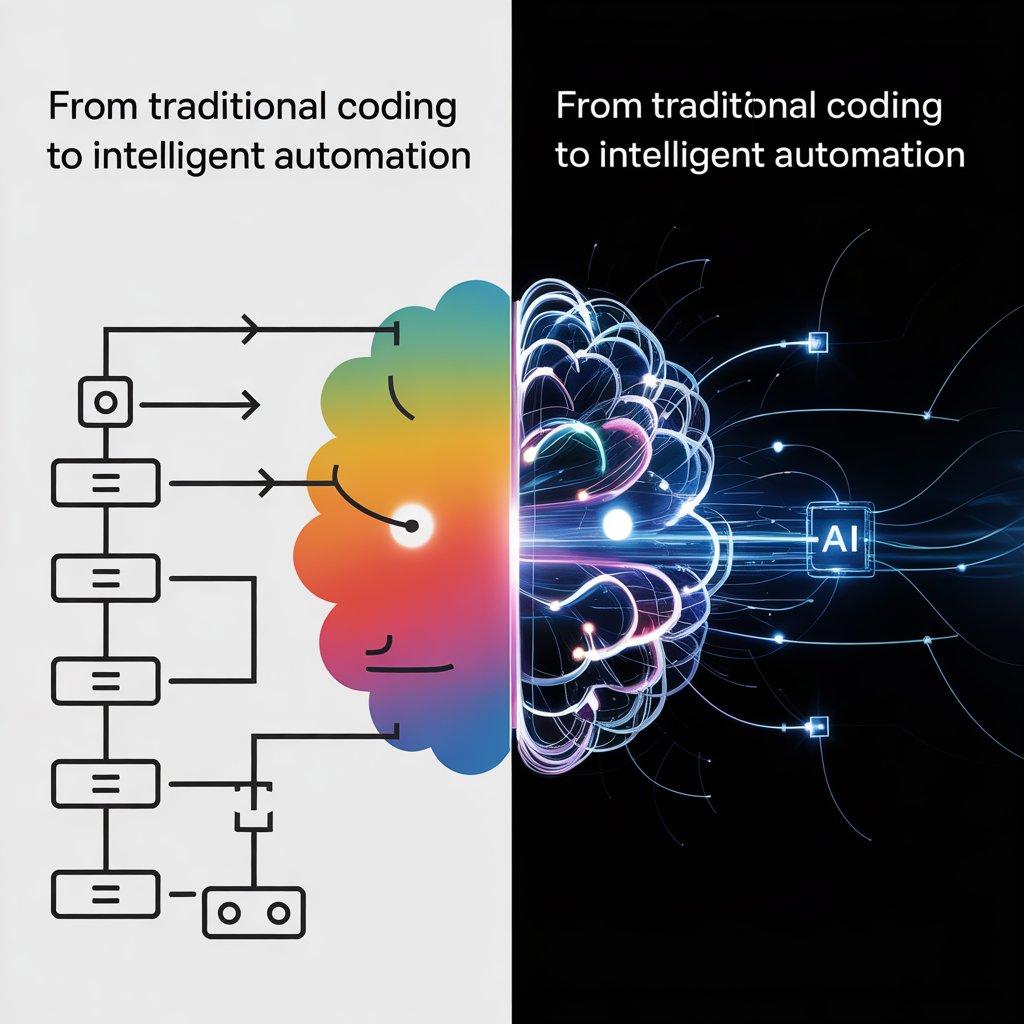
AI Agents vs. Traditional Programming
AI Agents vs Traditional Programming – What’s the Difference?Technology is changing fast, and one of the biggest shifts we are seeing today is the rise of AI agents. These intelligent systems are different from traditional computer programs because they can think, learn, and make decisions without constant human instructions. But how exactly do AI agents compare to traditional programming? Let’s break it down in simple terms!What is Traditional Programming?Traditional programming is how we’ve been writing software for years. A human programmer writes step-by-step instructions (code) that a computer follows.How It Works:A programmer writes rules and logic in a specific programming language (like Python, Java, or C++).The computer follows these rules exactly—it does only what it’s told.If something changes or goes wrong, a human must update the code manually.Examples of Traditional Programs:A calculator app that follows fixed rules for addition, subtraction, etc.A banking system that processes transactions based on predefined conditions.A website that displays content based on user input.Key Feature: Traditional programs are static—they don’t change unless a human reprograms them.What are AI Agents?AI agents are advanced software programs that learn, adapt, and make decisions on their own. They don’t just follow fixed rules—they observe, analyze, and improve based on data.How AI Agents Work:They receive data from their surroundings (text, images, audio, etc.).They use machine learning and AI models to understand patterns.They make decisions without needing human input.They learn from mistakes and improve over time.Examples of AI Agents:Chatbots like ChatGPT that understand and respond like a human.Self-driving cars that analyze traffic and make driving decisions.AI-powered customer service bots that solve problems automatically.Key Feature: AI agents are dynamic—they learn and evolve without manual reprogramming.AI Agents vs Traditional Programming – Key Differences FeatureTraditional ProgrammingAI AgentsRulesFixed, written by humansLearns rules from dataDecision MakingFollows strict instructionsMakes decisions based on patternsAdaptabilityDoes not change unless reprogrammedLearns and improves over timeError HandlingNeeds manual debuggingCan detect and fix errors automaticallyExampleA calculator, basic websiteChatGPT, self-driving carsWhy Are AI Agents Becoming More Popular?AI agents save time, improve efficiency, and reduce human effort in many areas. Businesses use them for automation, healthcare uses them for diagnostics, and tech companies use them for chatbots and smart assistants.However, traditional programming is still important for building structured, reliable systems that don’t need learning or adaptation. Many modern applications combine both AI and traditional programming for the best results.The Future – Will AI Agents Replace Traditional Programming?Not entirely! Traditional programming is still needed for building the foundation of applications. However, AI agents will take over complex, data-driven tasks that require learning and decision-making.In the future, we may see more AI-powered development tools that write code on their own, making programming even more efficient.Both AI agents and traditional programming play important roles in technology. While traditional programming follows strict rules, AI agents think and learn on their own. As AI technology improves, we can expect more intelligent systems that can adapt, automate, and innovate—making life easier for everyone!

Edge Computing – Faster Processing and Quicker Response Time for Web Apps
In today’s digital world, speed matters. Whether you're streaming a video, playing an online game, or using a web app, you expect it to work smoothly without delays. But sometimes, slow loading times and buffering can ruin the experience. This is where Edge Computing comes in.Edge computing is a new technology that helps process data closer to the user, making web apps faster, more efficient, and more reliable. Let’s understand what it is and why it’s changing the future of the internet.What is Edge Computing?In simple terms, edge computing is a way of processing data near the user, instead of relying on a faraway data center.How it Works:Normally, when you use a web app, your data travels to a large, centralized server (like one in another country).This process takes time, which can cause delays.With edge computing, the data is processed on a local server closer to you, reducing waiting time.Think of it like ordering food:Old way (Cloud Computing) → You order from a restaurant far away; it takes longer to arrive.New way (Edge Computing) → You order from a nearby restaurant; it arrives quickly.Edge computing makes web apps work faster by reducing the distance data needs to travel.Why is Edge Computing Important for Web Apps?✅ 1. Faster PerformanceSince data is processed closer to users, web apps load instantly, reducing lag and buffering.✅ 2. Lower LatencyLatency means "delay." With edge computing, response times are much faster, improving user experience.✅ 3. Works Without the InternetSome edge systems can process data even when there’s no internet connection. Once the connection is back, they sync with the main server.✅ 4. Better SecuritySince data is processed locally, there’s less risk of hacking or data theft compared to sending everything to a big data center.✅ 5. Less Load on the CloudCloud computing requires massive servers to handle billions of data requests. Edge computing reduces pressure on these servers, making everything run more smoothly.Where is Edge Computing Used? 1. Streaming Services (YouTube, Netflix, etc.)When you watch a video, edge computing stores commonly watched content in nearby servers.This means you don’t have to wait for videos to load! 2. Online Gaming (PUBG, Fortnite, etc.)Games require real-time responses.Edge computing reduces lag, so players experience smooth gameplay. 3. Web Apps (Google Docs, Zoom, etc.)Video calls and online documents need quick processing.Edge computing reduces glitches and makes web apps work faster. 4. Self-Driving CarsA self-driving car must process data in real-time to avoid accidents.Edge computing helps cars make split-second decisions without depending on a distant cloud server. 5. Healthcare (Smart Devices & AI)Devices like smartwatches track your heart rate.Edge computing analyzes data locally and alerts doctors in case of emergencies.Future of Edge ComputingAs more people use web apps, edge computing will become even more important. In the future, we can expect:✔ Even faster web apps with zero loading times.✔ Better AI-powered apps that work in real-time.✔ More secure data processing, reducing the risk of cyber-attacks.✔ A smarter, faster internet with instant access to everything.Edge computing is changing the way web apps work. By processing data closer to users, it makes web apps faster, more reliable, and more secure. Whether you're watching a video, playing a game, or using an online tool, edge computing ensures everything runs smoothly.The future of the internet is all about speed and efficiency, and edge computing is leading the way.

Self-Healing Software – The Future of Automation
Technology is improving at a rapid Speed, and one of the most exciting innovations is self-healing software. Imagine a software program that can fix itself when something goes wrong — without human help. Sounds like science fiction, right? But it’s real and becoming more common every day.Self-healing software is designed to detect problems, fix bugs, and even prevent future issues — all on its own. This means fewer crashes, less downtime, and smoother performance for users. Let’s explore how it works and why it’s changing the future of technology.What is Self-Healing Software?Self-healing software is a type of smart program that can:✅ Detect when something is wrong.✅ Find out why the problem happened.✅ Fix the issue automatically without needing human help.It works similarly to how our body heals itself. When you get a small cut, your body naturally starts to repair it. Self-healing software does the same for computer programs — it "heals" itself when it detects an issue.How Does Self-Healing Software Work?Self-healing software relies on Artificial Intelligence (AI) and Machine Learning (ML) to function. Here’s how it works step-by-step:🔍 1. MonitoringThe software constantly watches its own performance.It checks for slow speeds, bugs, or security issues.🛠️ 2. DetectionWhen the software notices a problem (like a sudden crash or error), it immediately identifies the cause.🔄 3. FixingIt applies a solution — like restarting a process, fixing broken code, or rerouting data — without needing human input.📈 4. Learning and ImprovingThe software remembers the problem and how it was fixed.Over time, it becomes better at handling similar issues automatically.Examples of Self-Healing SoftwareSelf-healing software is already being used in many industries:🔸 1. Cloud ComputingPlatforms like AWS (Amazon Web Services) and Microsoft Azure use self-healing to fix server issues automatically.If a server goes down, the software redirects traffic to another server — keeping services running smoothly.🔸 2. CybersecuritySelf-healing software can detect hacking attempts and shut down vulnerabilities before data is stolen.If malware is detected, it removes the threat and strengthens security to prevent future attacks.🔸 3. Mobile AppsIf an app crashes or shows an error, self-healing code can restart the app or update it to fix the issue.Apps like Spotify and Netflix use self-healing to improve user experience and avoid disruptions.🔸 4. Business SystemsLarge companies use self-healing software to manage business operations like data processing and customer service.If an error occurs, the software automatically fixes it, reducing downtime and improving productivity.Why Self-Healing Software is Important✅ Reduces Downtime – Fixes issues quickly without human involvement.✅ Saves Time and Money – Less need for human monitoring and fixing reduces costs.✅ Improves Security – Can prevent hacking attempts by closing security gaps automatically.✅ Enhances User Experience – Fewer crashes and better performance mean happier users.The Future of Self-Healing SoftwareSelf-healing software is still growing, but its potential is huge:👉 In the future, websites, apps, and business systems could all be fully self-healing.👉 AI-powered self-healing systems could make software failures almost non-existent.👉 Complex systems like autonomous cars and smart cities could run smoothly with self-healing technology.Challenges and Risks🔸 Complexity – Designing self-healing software is difficult because it requires deep AI learning.🔸 Security Risks – If hackers manipulate self-healing code, it could create security vulnerabilities.🔸 Dependence on AI – Over-reliance on AI could reduce human oversight and control. Self-healing software is like giving technology a "brain" and a "body" that can sense and fix problems on its own. It’s already making apps, websites, and business systems more reliable and efficient. As AI and machine learning improve, self-healing software will become more advanced — creating a future where technology not only works better but also takes care of itself.The idea of software fixing itself might have seemed impossible a few years ago — but today, it’s becoming a reality. The future is self-healing, and it’s just getting started!

How AI is Making Learning Personal and Smarter
Education is changing fast, and Artificial Intelligence (AI) is playing a big role in this transformation. From helping students learn at their own pace to giving teachers valuable insights about their students’ progress, AI is making education smarter, more personalized, and more effective.In the past, education was often a one-size-fits-all model — the same lessons, teaching style, and pace for every student. But not all students learn the same way or at the same speed. AI is changing that by creating customized learning experiences that adapt to each student’s strengths, weaknesses, and learning style. Let’s explore how AI is transforming education and making learning more personal and effective.What is AI in Education?AI in education refers to the use of machine learning, natural language processing (NLP), and data analysis to create smart educational tools and platforms. These AI-powered systems can:Analyze student performance – AI can track how students are performing in real time and identify areas where they are struggling.Provide personalized learning paths – Based on the student’s progress, AI can adjust the difficulty of lessons, recommend extra practice, and suggest alternative learning methods.Automate grading and feedback – AI can instantly grade quizzes and assignments, giving students quick feedback and helping teachers save time.Offer 24/7 support – AI-powered chatbots and virtual tutors can answer students' questions anytime, helping them study even outside of regular school hours.AI is not replacing teachers — instead, it’s acting as a powerful tool to support teachers and make their work more effective.How AI is Personalizing LearningAI is making education more personalized in several ways:🔹 1. Adaptive Learning PlatformsAI-powered learning platforms like Khan Academy and Duolingo adjust the difficulty of lessons based on the student’s progress.If a student struggles with a concept, the platform will offer easier exercises or extra explanations.If a student masters a concept quickly, the platform will provide more challenging material to keep them engaged.➡️ This helps students learn at their own pace without feeling overwhelmed or bored.🔹 2. Intelligent Tutoring SystemsAI tutors like Socratic by Google and Photomath can help students solve problems step-by-step, providing hints and explanations along the way.These AI systems understand how students think and adjust their teaching style accordingly.They also remember where a student previously struggled and focus on improving those weak spots.➡️ It’s like having a personal tutor available anytime, anywhere!🔹 3. Smart Content CreationAI is helping teachers create better and more engaging content.AI tools can generate quizzes, worksheets, and even lesson plans based on the curriculum.Platforms like Quizlet and Knewton use AI to create flashcards and practice tests tailored to the student’s needs.➡️ This reduces the teacher’s workload and ensures that learning materials match each student’s level.🔹 4. AI-Powered Feedback and GradingGrading assignments and giving feedback can be time-consuming for teachers. AI can automate this process:AI can instantly grade multiple-choice tests, coding assignments, and even essays.AI can also provide detailed feedback, highlighting mistakes and suggesting improvements.➡️ Students get quick feedback, which helps them learn faster.🔹 5. Language Learning and CommunicationAI-powered language apps like Duolingo and Babbel use NLP to teach languages more effectively.These apps adjust lessons based on how quickly and accurately the student learns new words and grammar rules.AI chatbots simulate real-life conversations, helping students practice speaking and listening skills.➡️ This makes learning a new language more interactive and fun!The Impact of AI in EducationAI is not just improving how students learn — it’s also helping schools and teachers:Reduced Workload for Teachers – By automating grading and feedback, AI gives teachers more time to focus on lesson planning and student interaction.Better Student Outcomes – Personalized learning paths help students understand and retain information better.Identifying Learning Gaps – AI can spot patterns in student performance and help teachers address gaps before they become bigger problems.Increased Accessibility – AI-powered tools can support students with disabilities by providing customized content and learning methods.Challenges and ConcernsDespite its benefits, AI in education also comes with some challenges:Data Privacy – AI systems need access to student data, raising concerns about privacy and security.Bias in AI Models – If AI models are trained on biased data, they may produce unfair outcomes.Teacher Dependence – Over-reliance on AI could reduce the teacher’s role in the classroom.To address these challenges, it’s important to develop AI systems that are transparent, fair, and designed with the input of educators and students.The Future of AI in EducationAI is still evolving, but its potential in education is enormous:AI-Powered Classrooms – Future classrooms could have AI assistants that help teachers monitor student engagement and adjust lessons in real time.Virtual Reality (VR) + AI – Combining AI with VR could create immersive learning experiences, like virtual field trips or science experiments.Global Access to Education – AI-powered platforms could bring quality education to remote and underprivileged areas, helping to bridge the education gap.The goal is not to replace teachers — but to empower them with smarter tools and give students a learning experience that’s tailored to their unique needs.AI is transforming education by making learning more personalized, efficient, and engaging. With adaptive learning, intelligent tutoring, and real-time feedback, AI is helping students learn faster and better. While challenges around data privacy and fairness remain, the potential benefits of AI in education are too significant to ignore.Education powered by AI is not a distant dream — it’s already here, and it’s reshaping the future of learning. The question is no longer whether AI will change education — it’s how we can make the most of this incredible opportunity.

The Rise of Autonomous AI Agents: How They’re Changing the World
Artificial Intelligence (AI) has been growing fast over the last few years, but now we’re seeing something even more powerful — autonomous AI agents. These AI agents are different from the usual AI tools we’ve known. They don’t just follow instructions — they can think, make decisions, and solve problems on their own without constant human help.AI agents are not just answering simple questions or doing repetitive work anymore. They are now managing complicated tasks, handling multi-step processes, and even making smart decisions in real time. From improving customer service to handling financial investments and even writing code, AI agents are becoming essential in many industries.✅ What Are Autonomous AI Agents?An AI agent is a smart software program that can:Understand its environment – It can collect information from its surroundings or from data sources.Make decisions – It can figure out the best action to take based on the information it has.Learn from experience – AI agents get better over time by learning from past mistakes and successes.Work with humans and other AI – They can team up with people and other AI agents to solve big problems.For example, OpenAI’s AutoGPT and BabyAGI can take a goal, break it down into smaller tasks, and figure out how to complete them — all without human help!🚀 How AI Agents Are Changing Different IndustriesAI agents are already being used in many areas, making work faster, smarter, and more efficient.🔹 1. Customer ServiceAI agents are making customer service faster and more helpful. Unlike basic chatbots that give canned answers, AI agents can understand the customer’s problem, give a clear response, and even solve complicated issues.For example, platforms like Intercom and Drift use AI agents to study customer behavior and predict what help they might need — making the experience smoother and faster.🔹 2. HealthcareIn the medical world, AI agents are helping doctors diagnose diseases, find the right treatments, and monitor patients’ health.AI agents like DeepMind’s AlphaFold have figured out how proteins fold, which is helping scientists develop new medicines.Some AI agents can monitor a patient’s health and warn doctors about problems before they happen.Imagine an AI agent noticing signs of a heart attack early and alerting the doctor — it could save lives!🔹 3. Finance and TradingFinancial markets move fast — and AI agents are handling them even faster.Trading bots can study market trends, make trades, and adjust strategies in real-time.AI agents in financial services can create personalized investment plans based on market changes.For example, BloombergGPT analyzes financial news and market data to help traders make better decisions.🔹 4. EducationAI agents are making learning more personal and effective.Platforms like Duolingo and Khan Academy use AI to adjust lesson plans based on how students are performing.AI tutors give real-time feedback and adjust the difficulty of exercises to match the student’s ability.An AI tutor can figure out which topics a student struggles with and create a custom lesson to help them improve.🔹 5. Software DevelopmentAI agents are helping developers write better code and automate boring tasks.Tools like GitHub Copilot and Tabnine help developers by suggesting code, fixing errors, and improving performance.AI agents can even handle the full software process — from coding to testing to launching.Developers now spend less time fixing bugs and more time creating new features.The Future of AI AgentsAI agents are getting smarter and more independent. In the future, they might be able to:Work together – Multiple AI agents could team up to solve big problems.Make strategic decisions – AI agents could handle business decisions and adjust to new challenges.Team up with humans – AI agents could become “digital co-workers,” helping humans work faster and better.For example, in the future, AI agents might manage a whole business — from handling customer service to managing finances — while constantly learning and improving.Challenges and ProblemsEven though AI agents are powerful, they also bring some challenges:Bias and fairness – If the data used to train AI agents is unfair, they might make unfair decisions.Accountability – If an AI agent makes a mistake, who should be held responsible?Job loss – AI agents might take over some jobs, which could lead to unemployment.To avoid these problems, AI agents need to be designed in a way that’s fair, transparent, and aligned with human values. Governments and companies will need to create rules to make sure AI agents are used responsibly.AI agents are no longer a thing of the future — they are here now, and they’re already changing the way we work, learn, and make decisions. They are making businesses smarter, improving healthcare, and even helping students learn faster.The rise of AI agents is not just about faster computers — it’s about machines that can think, learn, and make decisions alongside humans. The big question now is not if AI agents will change the world — it’s how fast they will do it.
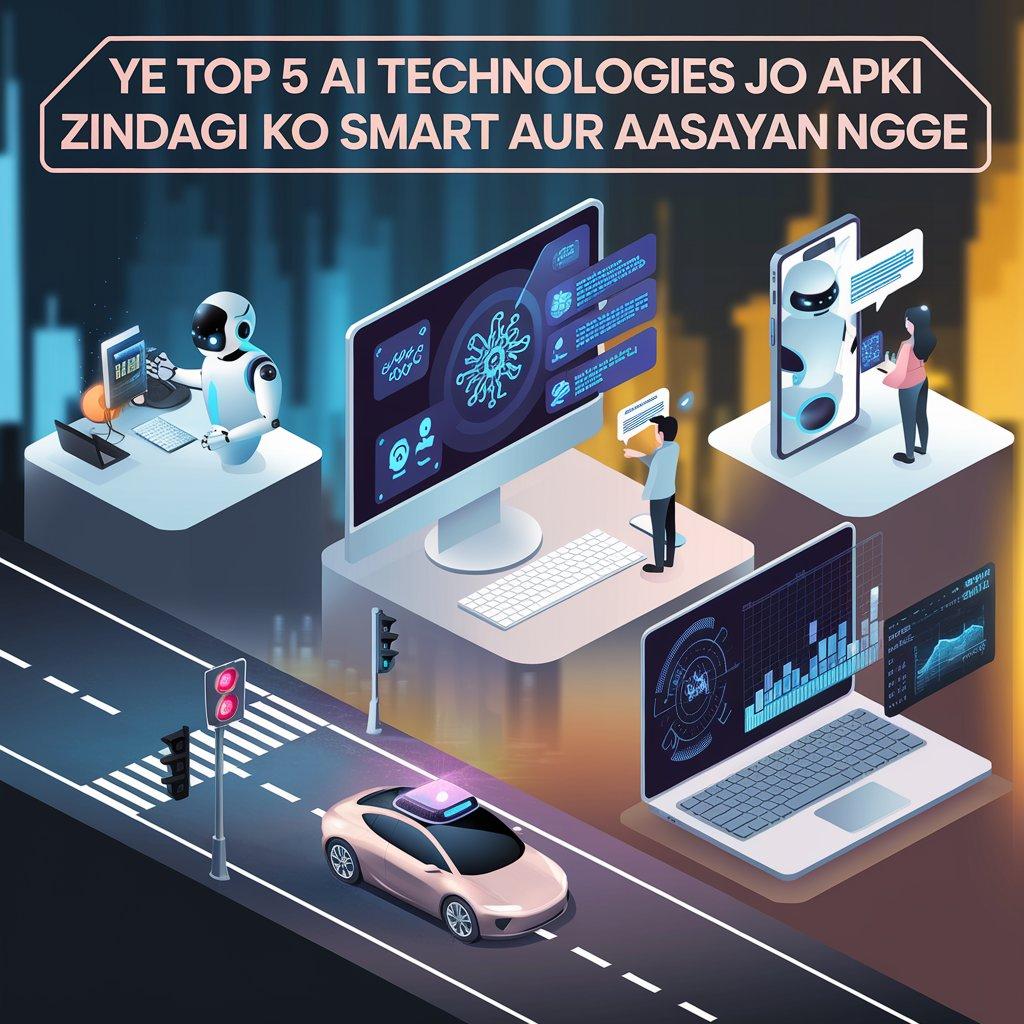
Ye Top 5 AI Technologies Jo Apki Zindagi Ko Smart Aur Aasaan Banayenge
Artificial Intelligence (AI) aaj ke zamane ka sabse bada badlav ban chuki hai. Har field me AI ka use ho raha hai—business se lekar healthcare tak. Chaliye, jaante hain AI ki top 5 technologies ke baare me jo humari zindagi ko smart aur easy bana rahi hain: 1. Generative AIGenerative AI ek aisi technology hai jo user ke diye gaye prompt ke basis par naya content create karti hai. Ye text, image, music, aur even code tak bana sakti hai.Kaha Use Hota Hai:✅ Blog likhne aur art banane ke liye.✅ Customer support ke liye chatbot ke roop me kaam karta hai.✅ Video editing aur audio mixing ke liye bhi use hota hai.Example:ChatGPT se blog likhna ya DALL-E se tasveer banana.AI-generated music platforms se naye songs banaye ja sakte hain. 2. Machine Learning (ML)Machine Learning ek aisi AI technique hai jo data ke basis pe seekhti hai aur apne aap improve hoti hai. Ye future ke trends ko samajhne aur prediction karne ke kaam aati hai.Kaha Use Hota Hai:✅ Netflix aur Amazon jaise platforms pe recommendations ke liye.✅ Bank me fraud detection ke liye.✅ E-commerce platforms pe shopping suggestions ke liye.Example:Netflix aapke dekhe gaye shows ke basis pe naye shows recommend karta hai.Bank me AI fraud transactions ko pakadne ka kaam karta hai. 3. Natural Language Processing (NLP)NLP AI ko insani zubaan samajhne aur uska jawab dene ki shakti deta hai. Ye technology chatbots aur voice assistants me use hoti hai.Kaha Use Hota Hai:✅ Chatbots jaise Alexa aur Siri ke liye.✅ Language translation ke liye.✅ Text summarize aur content banane ke liye.Example:Google Translate se ek bhasha ko doosri bhasha me convert karna.ChatGPT ke zariye sawalon ka jawab lena. 4. Computer VisionComputer Vision AI ko tasveeron aur videos ko samajhne ki shakti deta hai. Ye technology face recognition aur self-driving cars ke liye use hoti hai.Kaha Use Hota Hai:✅ Face ID se phone unlock karne ke liye.✅ Self-driving cars ko road ke signal samjhane ke liye.✅ Medical scans ke madhyam se bimari ka pata lagane ke liye.Example:Face ID se phone unlock karna.Tesla ke self-driving cars ka sadak ke signals ko samajhna.AI ke zariye X-ray aur MRI ka analysis karke bimari ka pata lagana. 5. Robotics and AutomationRobotics aur Automation ka use un kaamon me hota hai jo baar-baar karne padte hain. Ye machines ko smart bana kar human error ko kam karta hai.Kaha Use Hota Hai:✅ Manufacturing aur warehouse ke kaam me robots ka use.✅ Delivery systems ko automate karne ke liye.✅ Healthcare aur customer service me robots ka use.Example:Amazon ke warehouse me robots ka products ko handle karna.Restaurants me AI-based robots ka order deliver karna.AI ke ye top 5 technologies zindagi ko fast, smart aur asaan bana rahi hain. Business, healthcare, education aur entertainment ke alawa har field me AI ka use ho raha hai. Aane wale samay me AI ke bina zindagi ki kalpana karna mushkil hoga! 🚀

Trending AI in 2025: What’s Next for the World?
AI – The Future is Here!Artificial Intelligence (AI) is no longer something from science fiction—it’s already here and changing our lives every day. From helping us write emails to driving cars and diagnosing diseases, AI is becoming a powerful force behind technological progress and business growth. Let’s take a look at the most popular AI technologies and how they are shaping our future.Trending AI Technologies1. Generative AIGenerative AI can create text, images, music, and even code based on prompts from users. It’s widely used for creating content, automating customer service, and even producing art.Example: AI-generated art, automated blog writing, and chatbots handling customer service.2. Machine Learning (ML)Machine Learning allows computers to learn from data and improve over time without being directly programmed. It’s used for predicting trends, suggesting products, and detecting fraud.Example: Netflix suggesting shows based on your viewing history.3. Natural Language Processing (NLP)NLP helps computers understand and respond to human language. It powers voice assistants, chatbots, and language translation apps.Example: Alexa and Siri answering your questions or Google Translate translating texts.4. Computer VisionComputer Vision allows AI to "see" and understand images and videos. It’s used in facial recognition, self-driving cars, and medical scans.Example: Unlocking your phone with Face ID or AI diagnosing diseases from X-rays.5. AI in HealthcareAI is transforming healthcare by improving diagnosis accuracy, predicting diseases, and personalizing treatments.Example: AI detecting cancer early through medical imaging.6. Robotics and AutomationAI-powered robots are being used to perform repetitive tasks in manufacturing, logistics, and customer service. This increases efficiency and reduces human error.Example: Robots managing warehouse inventory or delivering packages.7. Autonomous VehiclesSelf-driving cars use AI to detect obstacles, read traffic signals, and make driving decisions in real time.Example: Tesla’s Autopilot and Google's Waymo cars.How AI Will Shape the Future✅ 1. Business TransformationAI will automate routine tasks, improve decision-making, and offer personalized customer experiences. Companies using AI will have a major advantage.✅ 2. Education RevolutionAI-powered learning platforms will offer customized lessons, real-time feedback, and career advice based on student performance.✅ 3. Smart Cities and InfrastructureAI will improve traffic flow, reduce energy use, and make public services more efficient.✅ 4. Healthcare AdvancementsAI will help diagnose diseases earlier, predict health issues, and create better treatment plans.✅ 5. AI in Creative FieldsAI will assist in creating music, videos, and art, making content production faster and more creative.Why AI is UnstoppableAI is improving rapidly as computers get more powerful and more data becomes available. AI models are becoming smarter, faster, and more accurate. In the near future, AI will handle complex decision-making, automate industries, and even enhance human creativity.AI isn’t just a trend—it’s the future. From simplifying daily tasks to solving global challenges, AI’s potential is limitless. The world is moving towards an AI-powered future, and those who adapt will thrive.

Skillxhub is Launching on 18th March – A Game-Changer in Career Building
The wait is finally over! After years of planning and months of dedicated effort, Skillxhub is ready to redefine the learning and career landscape. We are thrilled to announce the official launch of Skillxhub on 18th March—your one-stop platform for Courses, Certifications, Internships, and Skill Tests designed to make you job-ready. Powered by Pragyat IT Solution, Skillxhub is not just a platform—it’s a movement toward making students industry-ready and future-proof.A Dream Five Years in the MakingSkillxhub is not just a product of a few brainstorming sessions—it’s the result of a visionary dream that started five years ago. The founder envisioned a platform that would bridge the gap between academic learning and real-world skills. After years of refining the concept and exploring the market, the actual development of Skillxhub began one year ago.But here’s the twist—what was supposed to take a year came together in just 7 intense months of non-stop coding, testing, and fine-tuning! The team worked day and night, pushing boundaries to make sure Skillxhub delivered nothing but excellence.Skillxhub was not built overnight—it’s the product of relentless effort, a clear vision, and a passion to empower students.What Makes Skillxhub a Game-Changer?Skillxhub is not just another EdTech platform—it’s a powerful ecosystem that combines learning, validation, and career growth in one place. Our mission is to make students job-ready by providing them with industry-relevant skills and hands-on experience.Website: SkillxhubPowered by: Pragyat IT SolutionOur Vision and MissionAt Skillxhub, our mission is simple yet powerful:✅ To make students job-ready by providing high-quality learning resources and practical exposure.✅ To bridge the gap between learning and real-world application through industry-relevant certifications and internships.✅ To create a platform where learning meets earning—helping students turn their skills into income.Our vision is to become the go-to platform for students and professionals looking to upskill and succeed in their careers.Our Vision and MissionAt Skillxhub, our mission is simple yet powerful:✅ To make students job-ready by providing high-quality learning resources and practical exposure.✅ To bridge the gap between learning and real-world application through industry-relevant certifications and internships.✅ To create a platform where learning meets earning—helping students turn their skills into income.Our vision is to become the go-to platform for students and professionals looking to upskill and succeed in their careers.What Skillxhub OffersSkillxhub offers a comprehensive range of courses, certifications, and internships, covering both technology and management fields. We provide over 70 technology courses in trending fields like Artificial Intelligence, Machine Learning, Data Science, Cloud Computing, Cybersecurity, Digital Marketing, and UI/UX Design. These courses are designed to equip students with the latest industry skills, ensuring they stay ahead of the curve.On the management side, Skillxhub offers 35+ specialized courses in areas like Business Analytics, Product Management, Project Management, Financial Analysis, and Strategic Management. These courses are tailored to give students a strong foundation in business strategies and decision-making, making them valuable assets in any industry.All our courses are designed with a practical approach, ensuring that students not only learn theoretical concepts but also understand how to apply them in real-world scenarios.CertificationsOur structured Q&A-based certifications are designed to validate your knowledge and improve your career prospects. Each certification is industry-recognized and adds significant value to your resume.Prove your skills and boost your employability.InternshipsGain real-world experience through Skillxhub’s internship programs. We collaborate with top companies to provide you with practical exposure to industry challenges.Learn by doing and gain the experience employers are looking for.Skill TestsMeasure your progress and challenge yourself with our interactive skill tests. From coding challenges to business scenarios, Skillxhub helps you track your growth and identify areas for improvement.Test your skills, identify gaps, and improve continuously.Why Skillxhub Stands Out✅ Industry-Relevant Content: Our courses and certifications are designed based on industry demands.✅ Real-World Exposure: Internships and projects ensure you can apply your knowledge.✅ 24/7 Access: Learn anytime, anywhere, at your own pace.✅ Career Support: Resume building, interview tips, and job search guidance.Meet the Dream TeamFounder - Pragyat SinghCo-Founder- Shivanjali SinghDevelopment Team - Shyam Jaiswal, Nilesh PrajapatiTesting and Support - Alok TripathiA passionate team committed to your success.The Journey So Far✅ Idea conceived: 5 years ago✅ Development started: 1 year ago✅ Completed in: 7 months✅ Testing and refining: 2 monthsSkillxhub is not just a platform—it’s a mission to empower students with the right skills and opportunities
Grok AI: Elon Musk’s Revolutionary AI Changing the Social Media Landscape
Artificial Intelligence (AI) is evolving rapidly, and Elon Musks xAI has made a significant impact with Grok AI—an AI chatbot integrated into the social media platform X (formerly Twitter). Grok AI aims to provide real-time, conversational assistance while introducing cutting-edge features like text-to-image generation and deep search capabilities. In this blog post, we’ll explore what makes Grok AI unique, its key features, and how it stands out from other AI models.What is Grok AI?Grok AI is an artificial intelligence chatbot developed by xAI, Elon Musks AI company, and launched in November 2023. Initially available only to Premium subscribers, it became accessible to all users on X in December 2024. Grok AI is designed to provide a more conversational and interactive experience, combining humor, real-time knowledge, and creative output.Key Features of Grok AI1. Real-Time Knowledge and Conversational AssistanceUnlike many AI models that rely on static data, Grok AI is trained to respond with real-time information, directly linked to events happening on X and the broader internet.2. Aurora: AI-Powered Text-to-Image GenerationIn December 2024, xAI introduced Aurora, an advanced feature within Grok that allows users to generate photorealistic images from text prompts. This feature makes content creation more accessible and visually engaging.3. Grok-3: Enhanced AI ModelIn February 2025, xAI rolled out Grok-3, an improved version of the chatbot that includes:✅ Enhanced reasoning and problem-solving abilities✅ Faster response times✅ A "Big Brain" mode for complex queries✅ DeepSearch engine for more accurate results4. Less Restricted Content GenerationGrok AI operates with fewer content restrictions than most AI models, allowing more open-ended responses. However, this has also sparked controversy around the potential for misinformation and inappropriate content.5. Seamless Integration with XGrok AI is deeply integrated into the X platform, allowing users to engage with it directly through posts and direct messages. It can analyze trending topics and provide insights in real-time.How Grok AI Stands Out✅ Direct Access to Real-Time Data: Most AI models rely on static training data, but Grok AI is linked to the X platforms live data feed, making it more dynamic and accurate.✅ Humor and Personality: Grok AI is programmed to respond with humor and wit, making conversations more engaging.✅ Premium vs Free Access: Free users get limited access, while Premium subscribers receive higher limits and exclusive features.Challenges and ConcernsWhile Grok AI brings many advantages, it also raises some challenges:❌ Content Moderation: The lack of strict filters increases the risk of offensive or misleading content.❌ Privacy Concerns: Grok AI uses data from user activity on X, raising questions about data privacy and consent.❌ Bias and Accuracy: Since Grok AI pulls real-time information, the accuracy of its responses can vary based on the quality of available data.How Businesses Can Benefit from Grok AI🔹 Marketing Automation: Generate creative social media posts and visuals effortlessly.🔹 Customer Engagement: Use Grok AI to automate customer service and improve response time.🔹 Trend Analysis: Grok AIs real-time insights help businesses stay ahead of trends.Grok AI is more than just another chatbot—it represents the future of AI-powered social interaction. Its ability to combine real-time information, creative content generation, and human-like conversations gives it a competitive edge in the AI landscape. As AI continues to evolve, Grok AI could redefine how businesses and individuals interact with social media and beyond.